

Today, a physicist-neuroscientist on:
measuring a brain’s capacity to change
why dementia is an information problem
and the part where I explain MRI wrong to someone who actually knows what’s up.
Prantik Kundu is a physicist, a neuroscientist, and the CEO of EyeThree. He spent years at the NIH and the University of Cambridge learning to pull signal out of functional MRI, and now he’s trying to turn that into something clinicians and patients can use. This conversation has been edited for length and clarity, and reordered so the thesis comes first. The section where I misexplain MRI to a physicist is preserved in full, for my public embarrassment. This article is dense and science-heavy. If you like going behind the curtain, join me.
His research is prolific. Buckle up readers, you are about to be in the presence of genius.

The common currency
Owen: Welcome to The Frontier Psychiatrists.
Prantik: I’m Prantik Kundu, CEO of EyeThree.
Owen: Is it fair to say you’re a physicist?
Prantik: I think I am a physicist. But I’m also a neuroscientist. I’ve put in the work and the blood, sweat, and tears to be both.
Owen: So what can you tell about a brain by looking at it the way you and your team at EyeThree do?
Prantik: Our specialty is measuring what you may know as neuroplasticity, the ability of the brain to change. What’s special about what EyeThree does is that we can measure the potential of a piece of brain to change, not just that it’s changing. We can measure the change from point A to point B, but at point A we can tell you how likely it is that you’ll have a change at point B. And we can do that for every circuit in the brain.
That’s really important, because it means you can determine dosing of different medicines based on how much pressure, how much oomph, you need to move a part of the brain from one state to another.
Owen: Let me make this metaphorical. I’m a big music fan, and I know you are. I recently went to see Rush. I’m not a huge Rush fan historically. Have I listened to Rush? Yes. Do I enjoy Rush? Yes. But I showed up with a pre-test probability for how hard Rush was going to rock me, and then they had a new drummer, because their drummer died. “How likely is this show to rock” is a question we all want answered before a concert. And as clinicians, “how likely is this person to change in a way that heals them” is the question.
Prantik: That’s right. You need to know how many beers to drink at the pregame to have a really good time.
Owen: Or what earplugs I need, or how many times to listen to the record so I’m properly excited when they play “Tom Sawyer.” I mostly pregamed with “Freewill.” So what is it about our brains that makes one more likely to change than another? Why is that even a feature?
Prantik: What makes a brain ready to change is a combination of factors. Part of it is genetic, in terms of your synapses, the little connections between neurons that let them speak to each other: how quickly they can adapt, change shape, grow new connections or pull back old ones, and how strong those connections are. That’s synaptic plasticity, and we differ from each other because there’s no right answer. Evolution has determined that there’s no right answer, so there’s a lot of variation in the population.
Another way brains differ is in neurotransmitter. If somebody is better at generating dopamine, they can trigger enthusiasm for learning and exploration. If they have less, less so. And the neurons that make the dopamine may be more or fewer.
So it’s a very complex combination: the transmitters you have, the cells you have, the links between the cells. But it turns out, and this is what EyeThree is commercializing for both clinical use and drug development, based on fifteen years of research before it, that there is a common currency of plastic potential. And that currency is how many separate processes you have running in the brain, over the whole brain or in a little patch of it.
Owen: Oh. So the brain’s a GPU, not a CPU.
Prantik: It’s funny. The brain is both a GPU and a CPU. That’s why the brain is special, and that’s why we don’t have proper artificial intelligence yet: there’s no piece of hardware that does what the brain does. The brain runs multiple pieces of software, and those pieces of software run on what we call neural circuits. It turns out the mature adult brain has, on average, about twenty.
Why twenty? Well, why do we have twenty fingers and toes? It’s a basic feature of our anatomy, like two arms and two legs. We have about twenty major networks. Those networks are the backbone. But we all have different fingerprints, too, and those big circuits have a bit of a mind of their own. Sometimes within a circuit they separate, sometimes they come together. The ability to switch how they organize themselves, that is the end currency of plasticity. Whether it’s the transmitters or the synapses, the ability of these circuits to rearrange themselves to represent different types of information is the end state.
As we grow older, that functional plasticity stabilizes. It becomes less and less flexible, which means two things. You’re not as able to learn new things quickly. On the other hand, you’re more and more effective at being experienced. It’s a double-edged sword, and that’s why the brain is organized this way. We’ve found that some people stay plastic longer and other people stabilize earlier in life. And your environment, psychosocial and chemical, interacts with your rate of plasticity on each of these networks.
So it’s important to know, per circuit, what the level of plasticity is. At EyeThree we’re doing the research to figure out what constellations of these measures across these circuits determine what your mental and neural experience is like. The first area we’re working on intensely is biomarkers of dementia. Then we’ll follow with biomarkers in neuropsychiatry.
Dementia is an information problem
Owen: Dementia sucks.
Prantik: Correct.
Owen: The general public thinks of forgetting, disorientation, maybe irritability depending on their personal experience. In your studies, what’s different about a brain with dementia versus the brain of somebody in their late twenties?
Prantik: Dementia has genetic underpinnings, the APOE gene and its alleles. We’ve found that the higher your gene dose of APOE, the lower your neuroplasticity is across several circuits, up to 10 percent lower than the general population. We’ve also found that if you have a lot of tau deposits, you have an alteration in how neuroplasticity is expressed. And we’ve found circuits where high plasticity is protective against experiencing and expressing the symptoms.
When we combine these measures properly, our research currently tells us we can predict the likelihood of resilience up to ten years ahead of the emergence of symptoms. That gives people time to intervene, change their lifestyle, change their diet, and if necessary begin preventative medication. On the flip side, with all the new drugs being developed, we can give researchers and drug companies the tools to measure the effect of their treatment in a way that makes sense for the patient.
Because dementia sucks, and one reason it sucks is that it’s not really reversible. You can slow it, but it’s not reversible, for a very interesting reason. This is our internal research and we’re working on validating it, but basically: as you accumulate damage to the synapses, from neural damage and inflammation, remember that those synaptic connections carry information. They carry your identity. As you get more and more errors in that encoding, the information slowly gets lost. And at a certain point, even if you clear out all the molecular signs of damage, the information is too noisy to correct. It’s an information phenomenon.
Owen: So it’s my Rush example again. You can replace one player with another who knows enough of the tunes and it still sounds like Rush. You can replace a second player, and maybe they’re very good. But by the time you’ve replaced the whole band with people who don’t know the tunes, you’ve lost the crucial essence that is Rush.
Prantik: Right. Except the brain is a band of millions and millions of players.
Owen: A million-player band, and they all matter.
Prantik: They all matter. Or at least, if you get rid of half of them, they’re all in disharmony. They just sound like noise.
Owen: It’s not that they can’t play. It’s that they can’t play in time and in tune with each other.
Prantik: That’s right. And so the problem with dementia, as we’re finding, is that if you have low plasticity and an environment that wasn’t protective, you won’t have enough reserve late in life to do that error correction. You won’t have enough time to find the right player to replace the one who’s leaving.
Owen: Rush had the ability to find a great drummer who could live up to the one they were replacing, and that mattered because Rush is a technically complicated band. But your brain is constantly replacing players. You’re always losing one of the million.
Prantik: Right. And if you have enough time, or enough spare drummers, ten spare drummers, you’ll pick the right one and sub them in.
Owen: It’s not a question of not having a drummer. It’s a question of getting the right drummer for the set.
Prantik: And having enough drummers on hand, and getting them in quick enough. That’s why plasticity winds up being fundamental to protection, and why resilience to dementia is so dependent on it.
Owen: Is it fair to say dementia is essentially a plastopathy? A deficiency in the brain’s ability to maintain appropriate plasticity?
Prantik: I wouldn’t quite call it that, because dementia is a disease of tissue damage. Microscopic, neural-level tissue damage due to inflammation. Once you have that damage, the thing neural tissue is good at, it can’t do anymore. So it winds up being a plastopathy, you’re right, but it doesn’t start that way. It starts as microscopic damage. Ultimately, the symptoms we see, and critically the irreversibility, that’s the plastopathy.
And now we’re thinking about the future a little, but it’s time to really see the brain as a software and information system. Once a computer is out of memory and one program crashes, then another crashes, and another, and you can’t control anything, the whole computer crashes. When you have a computer with enough memory and one program crashes, you click and turn it off. But if you have a browser open with fifty tabs and one of them goes out of control, you can’t move your mouse anymore, and then the whole system goes.
So that’s why plasticity, and this concept of reserve, is extremely important. It allows us to react properly. What EyeThree is doing is, first, creating markers that let us see how much reserve is left. And then, more broadly, creating tools and platforms for clinicians and patients and imaging providers to integrate all this knowledge and give agency back to people about their mental health.
Owen: And fundamentally not just their brain but their mind, because mind is essentially this epiphenomenon the brain grants us when it’s plastic enough to change dynamically.
Prantik: Exactly. And it’s vital we make that distinction. We’ve solved many problems in cardiology, in cancer, in AIDS. We’re living longer. What’s the point of living longer if you can’t be happy?
Owen: Or know who you are.
Prantik: Of course. The future of health is brain health, and it’s also mind health. The aim is to live longer but retain our identity and still be able to grow and change into later years.
And I have to say, one of my passions is that as artificial intelligence emerges and gets more advanced, we have a tremendous opportunity to advance ourselves as a species. But that requires us to be as sharp as the AIs, funnily enough.
Owen: If we want to keep up with the AI’s ability to change, we should be more flexible ourselves.
Prantik: Exactly. We think plasticity will become fundamental to guiding ourselves, as a people, to take advantage of this bright future: solving scientific problems we were never able to solve, space travel, the climate. We have all this intelligence now, but we also need the people to have the perceptive intelligence and the ability to handle and control these AIs. That’s a fifty- or hundred-year target, but it’s about helping us walk into the next era of what we can do as human beings.
The part where I explain MRI wrong to a physicist
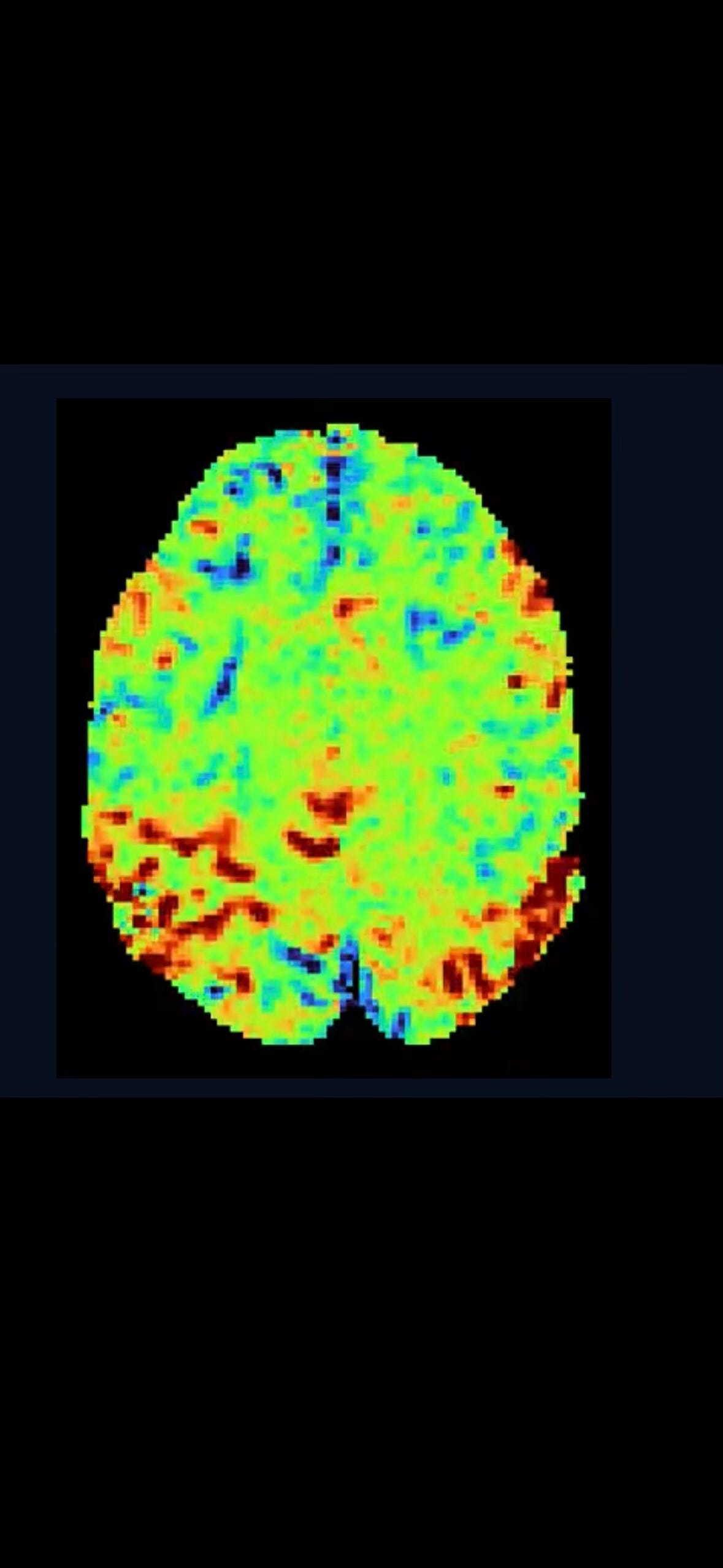
Owen: Let’s back up. How does a person end up doing this?
Prantik: I was born in New York. I’m Indian American, went to public school, I have a wife and a couple of kids.
Owen: Did you go to Stuyvesant?
Prantik: Yeah.
Owen: Guessed it. For those who aren’t New York natives, what is Stuyvesant High School?
Prantik: Stuyvesant is an institution. It’s among the oldest high schools in the city, a specialized high school you test into at fourteen. When I got in there were three of them, as there had been for a hundred years, and Stuyvesant was the hardest to get into. The great thing about it was you could have gone to jail at some point and never done your homework and still be accepted just by passing the test. So it was a very colorful group of people exploring life, very inquisitive, and it was a tremendous experience to develop at an early age.
I was born as a physicist, in my intellectual life, at the tail end of Stuyvesant. My first research project was in quantum computation, where I discovered a quantum logic gate. Then I studied quantum chemistry and identified quantum tunneling states in small molecules. I’m Indian, so my parents wanted me to be a doctor, so I had to hedge.
Owen: How disappointing you must be.
Prantik: Terrible. It’s awful. So I went to the NIH and started working in functional neuroimaging, partly because, as an Indian American, we have a tendency to think about philosophy, but also because it was an incredible computational challenge. I did a couple of years of post-bac in motor control, in Mark Hallett’s lab first, and then under Ralph Sacco, the first neurologist president of the American Heart Association, during the peak of discoveries in stroke care. Then for my PhD I got into the NIH–Oxford–Cambridge program, a small number of people picked to solve hard problems. You get a lab at the NIH and a lab at Oxford or Cambridge. I was in Peter Bandettini’s lab, the inventor of fMRI at the NIH, and Ed Bullmore’s lab at Cambridge, essentially a co-developer of graph theory in brain connectomics.
Owen: Break it down for the audience. What is an MRI, and then what is a functional MRI? The first probably helps with the second.
Prantik: An MRI is a way to watch the chemistry of internal organs. You can see what’s called soft tissue, which is largely the organs, as distinct from bone. A CT scan uses high-energy x-rays and is good at detecting bone. MRI is really good at seeing organs with a lot of water in them.
Owen: I’m going to do something embarrassing. I’m going to explain how I think an MRI works, and you correct me. Physicists were my heroes growing up. I am by no means a physicist.
Prantik: Okay.
Owen: MRI scanners have these giant magnetic fields, which jostle the hydrogen atoms in the molecules in our body, and there’s more hydrogen on water than on other things. You excite an electron spinning around a hydrogen atom to a higher energy state, it decays back down, and in the process it emits a photon. That photon is captured by a spinning array of radio-frequency antennas that whirl around you in the tube, and a ton of math figures out that because we got this many photons at these wavelengths, there’s that much water here. “Question mark.”
Prantik: Kind of. Kind of. Kind of.
Owen: I’m excited to know where I went wrong.
Prantik: So the MRI does induce photons to be emitted from the tissue, but the photons are coming from the nuclei. The protons themselves. Not the electrons.
Owen: Oh. So I’m wrong.
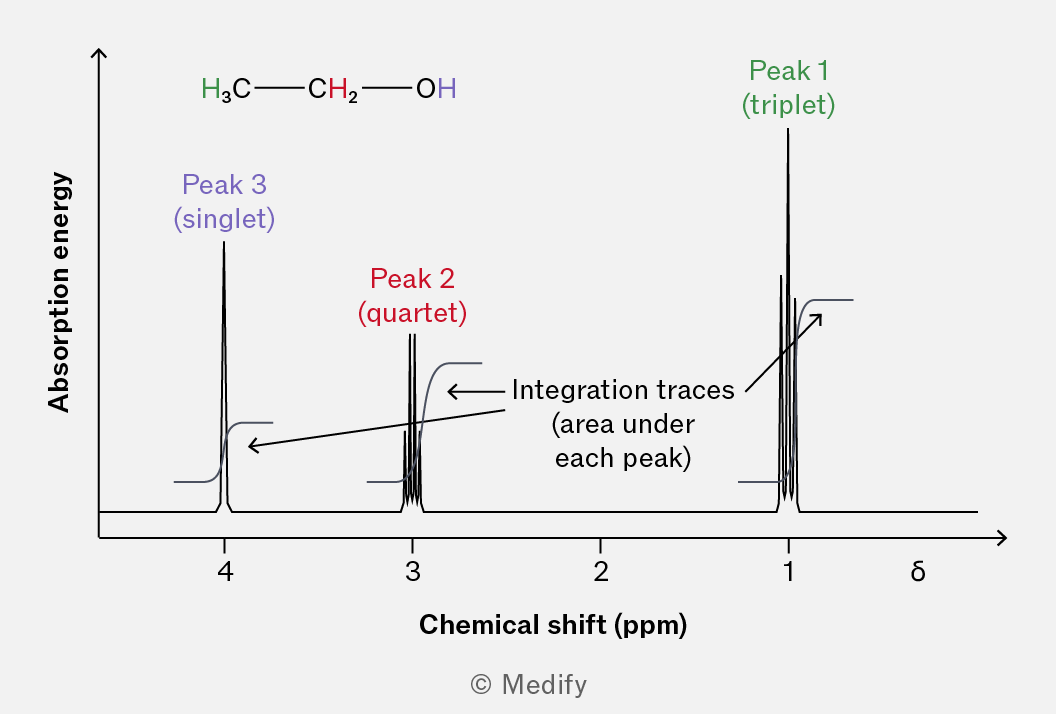
Prantik: It’s really cool how it works at that level. Every proton is like a bar magnet. If you take a small bar magnet and put it next to a bigger magnet, the small one lines up with the big one. That’s exactly how protons line up with the much, much bigger magnetic field. And something special happens when you take a small magnet that’s lined up and turn it: it wants to realign. The energy you put in to rotate the small magnet, as it relaxes, makes a fluctuation in the electromagnetic field. And that fluctuation is perceived by a detector as a photon.
Owen: So this is why it’s called nuclear magnetic resonance. Because it’s from the protons in the nucleus. Not the electrons at all. This is why I’m glad I checked.
Prantik: Not the electrons at all. However, electrons do interact with the magnetic field. Each proton sits in a local magnetic environment, and what makes one proton respond more enthusiastically than another is that environment, which is affected by electrons.
Owen: So when you pull oxygen off hemoglobin to feed a cell, that’s changing the magnetic environment?
Prantik: When you pull oxygen off oxyhemoglobin, it leaves an unpaired electron. Electrons are also little bar magnets, but a pair of electrons behaves like one bar magnet, and when you remove one of the pair, it flips the other direction. Unpaired electrons make the local magnetic field really wonky. And when the field is wonky, the proton behaves in a wonky way, and a whole neighborhood of protons starts behaving in wonky ways. They can’t constructively interact. You don’t get a clear signal, you get a fuzzy signal, and in fact you see no signal.
So when fresh, oxygenated blood comes in, we get a strong signal. When the hard work in our brains consumes that oxygen and leaves hemoglobin without it, the signal drops. The level of oxygen in the blood affects the signal we see in blood-rich organs. One of those organs happens to be the brain. And there we have functional MRI.
Owen: To be clear, you’re a brain guy.
Prantik: I’m a brain guy, a hundred percent. Kidneys can be imaged this way too.
Owen: You’re a blood-rich-organ guy.
Prantik: I’m a blood guy because I’m a brain guy. I’m a blood and brain guy.
Can I add one point I think you’d love? There are no moving parts in an MRI. Nothing is spinning inside it. The MRI is actually constructed very much like a loudspeaker: a coil of wire being energized inside a big magnet. And the receivers are antennas, in the same sense that you have an antenna on your AM/FM radio, except these are extremely sensitive and they’re laid out like radio telescopes in the desert, or like radar arrays on fighter planes.
The most amazing thing about MRI is that it sees big fronts of signal coming in, like big waves on the ocean, and with the mathematics you described, it decodes the waves on the ocean into the little fish swimming around causing them. That’s the special math.
Owen: It seems almost impossibly complex that humans figured this out.
Prantik: It is impossibly complex. It is truly a miracle, because MRI is the absolute safest imaging technology and also the most sensitive, and it’s very rare that those two things happen together. But the intelligence that goes into pulling out as much information as possible comes from very careful, clever physics in how you play it. An MRI is like a piano. It’s a loudspeaker, so you’re literally playing pulses, combinations of radio-frequency waves and magnetic changes. That’s called encoding. The encoding lines up the bar magnets, then you push them down a little and let go, like a guitar string, and as they resonate, you hear the music. And just like our ears decode frequencies into events, an MRI works very much like our ears.
Owen: In physics or organic chemistry class they call it nuclear magnetic resonance, but it’s literally resonance. It always seemed like sleight of hand to call it that, because no one told me, no, it’s vibrating back and forth.
Prantik: It’s exactly like music.
Owen: So with this miraculous invention, what have you done with it?
Prantik: Functional MRI was invented around 1990, with the discovery that you could see changes in blood oxygenation in the brain at reasonable resolution. Not just the whole brain on or off, but whether a blood vessel had a little more or less oxygenated blood. In the thirty-five years since, we’ve refined that smaller and more precisely. Now we’re at what we call mesoscopic resolution. Imagine a ruler, and how small a millimeter is, and then a box one millimeter on each side. We can measure accurately and robustly how much the blood oxygenation is changing in that one-millimeter box every second. And we can do that for all the one-millimeter boxes filling the entire brain, on the order of a million boxes, all at the same time, every second.
Owen: One would think that if what was happening in a million little boxes was related, one box to another, that might tell us something useful.
Prantik: Exactly right. And that’s another miracle, a completely independent one. Our field has gotten many miracles that we have yet to be properly effective and grateful with, but we’re working on it. It’s called neurovascular coupling.
Neurons operate in communities. Groups of neurons make up tiny microcomputers in the brain, and each microcomputer needs energy. It needs to plug into the wall. In the brain, that means being near capillaries, where oxygen and sugar can diffuse out and give the neurons everything they need. But a biological computer, unlike a silicon computer, needs to be on all the time. As soon as it powers off, it’s like your computer’s memory: it loses the information and basically dies.
So the brain and the blood are intimately coupled. If you put a person on a table balanced on a fulcrum, relaxing, and got it perfectly balanced, as soon as you told them to think, the table would tip toward their head. The brain consumes 20 percent of the oxygen capacity of the cardiovascular system at rest. It’s that energy hungry. And because those neurons always need to be plugged in to stay alive, the brain is extremely adamant about keeping them fed. It constantly oversupplies them, and as soon as any activity happens, the capillaries open up and dump even more blood in.
That coupling is super tight. With a perfect measure, which my research has been working toward and we’ve largely achieved to the best of our ability, you can see neural activity with exquisite precision through the blood response. At this point we’re not even concerned with blood volume or flow. We can look at raw energy demand by a patch of neural tissue. We call that cerebral energetics.
Owen: Let me say it back. Because the brain is so energy hungry, it’s always being supplied with blood. And because the supply is so sensitive to moment-to-moment demand, and thinking hard is energetically expensive, you can closely approximate how hard any part of the brain is working by knowing how much blood is going there and how much energy is being pulled off it.
Prantik: Exactly. And this is detectable down to about 400 microns. Below that it gets nonlinear, but above 400 microns an inch is an inch and two inches is two inches. It’s linear and stable.
And as you were saying, the patterns of energy use between different parts of the brain reveal the relationships between those parts. The first generation of fMRI correlated brain activity to tasks: tap your finger for twenty seconds, look at faces, look at a checkerboard, what activates? Then in the mid-’90s somebody discovered that if you just look at the patterns from one part of the brain to another, the parts that are supposed to be connected have the same patterns of activity. Over the years we found that to be true at deeper and deeper levels.
This happens to be complicated, because it mixes statistics with physics with biology, and you have to be right. If you’re not, you get funny findings that take you in the wrong direction. Even though we’ve had the technique for thirty-five years, the field has hit stumbling blocks along the way. We think we now have an exquisite understanding of each relationship between the statistics and the biology, so we can finally make use of this in the area it’s needed most, which is psychiatry.
Psychiatry involves the whole brain, but it’s most critical in the deep parts, which are full of intricate interactions. You can probe those by looking at the energetic correlations between parts of the deep brain, and then how those relate to the cortex. That cascade, from the deep brain turning the dials on the brain’s basic power mechanisms up to the expression of elaborate behavior, is what we see when we’re speaking to each other, when we’re happy, or when we experience a disturbance that makes us less happy, or makes us express behaviors we’d rather not, like OCD, or have sensory phenomena that aren’t there, like in schizophrenia.
There have been an absurd number of papers from labs all over the world, something like $400 million invested over thirty-five years. As a field, we have an incredibly detailed understanding of the architecture of the brain that we use internally, and we’ve failed at communicating it to the public and at making the tooling available to clinicians and patients. Ask a person on the street how much we know about the brain and they’ll say, not much. In truth, an enormous amount. Now, with cloud computing and AI, it’s the right time to bring it out. That’s part of what EyeThree is doing.
Owen: Let me try to understand one step further. With machine learning there’s a power law: more training data, better model. More compute, better model. Is that fair?
Prantik: Up to a point. It depends what you know about the system, because it is garbage in, garbage out. If the training data isn’t structured appropriately, we’ll be led astray, just as we have been throughout the history of neuroscience. It’s really important that the right people with the right knowledge train these systems. This isn’t like particle physics, where the laws are so tight that deviation is easy to detect. It’s not like image generation, where if a face is slightly fuzzy, big deal, give it more data.
We need machine learning in neuroscience because the interactions between parts of the brain are so complex, and the modes of activity and types of measurement are so complex, that it’s increasingly intractable for human teams to coordinate all of it. Particularly given the asymmetry between the complexity of the problem, which is very high, and the number of people trained to address it, which is very small.
Owen: As evidenced by the fact that a doctor who uses fMRI every day didn’t know how it worked at the beginning of this conversation.
Prantik: That’s a common issue, and it’s not your fault. It’s our fault. We need to do better.
Owen: Is that complexity in part because the data is very dense?
Prantik: In part because it’s very dense, and in part because it’s extremely complicated. The signal you’re interested in is really rich and really beautiful, but it’s sitting as a little nut inside a much bigger, hostile fruit that is a whole bunch of junk. It’s like a coconut. You have to rip off the husk, break the shell, and the inner goodness is a thin layer of coconut meat.
Owen: So the problem is we have this unbelievably complex, dense data, and much of it is garbage for our purposes.
Prantik: Over 95 percent of a functional MRI measurement is trash. And until very recently we didn’t have either the physics tooling or the statistical tooling to properly separate the wheat from the chaff. We’ve only just achieved it within the last couple of years.
Coda
Owen: I’m so glad we did this. I learned a ton. And you got to know what I don’t know, which may be useful to you.
Prantik: The smartest people know what they don’t know.
Owen: Well, I’m glad I checked. Thank you.
Prantik: That was a blast.
I’ve got a new book!

FYI, It’s $0 if you have kindle unlimited. Share it in those group chats of yours!
Thanks for reading. The newsletter grows when you share it.
The claim that more than 95% of an fMRI measurement is noise puts a useful brake on the authority of a brain image. Before this becomes a clinical tool, patients need to see how signal separation changes decisions compared with simpler assessments, not only how clean the image looks.
"Common currency of plastic potential" is a hell of a phrase. Psychiatry still doses mostly by population averages and vibes, so a circuit level measure of who can actually change would be the most useful thing to happen to prescribing since... well, ever. Also respect for admitting you explained MRI wrong to the guy who wrote the explanation lol