

Today’s column is a conversation between Owen Muir, MD, and Nico Grundmann, MD, MBA
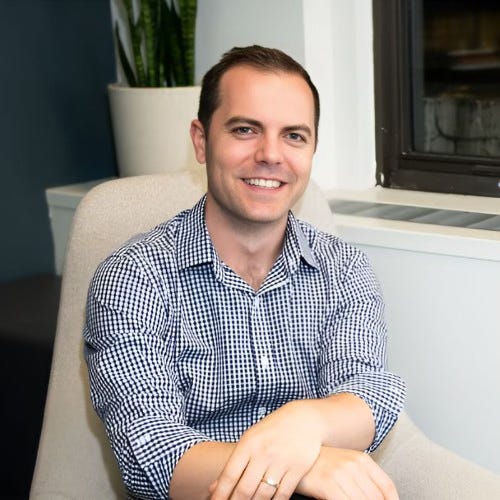
Dr. Nico Grundmann is the co-founder and Medical Director of Ember Health, which provides IV ketamine for depression across five sites in New York City. He is a board member of the American Society of Ketamine for Physicians, Psychotherapists & Practitioners (ASKP3). Before medical school, he worked at the Harvard AIDS Institute in Botswana, established HIV treatment programs in Zambia, and founded pediatric hospitals in Cambodia. He trained in Emergency Medicine after completing an MD-MBA at Stanford. We spoke about ketamine’s safety profile, Ember’s 40,000-infusion dataset, and why at-home ketamine keeps him up at night.
Ketamine: A Drug That Defies Categories
Owen Muir: In emergency medicine training, how are you taught to think about ketamine? What is it, and what do you use it for?
Nico Grundmann: Ketamine’s a funny drug. It was first approved in 1970 for anesthesia and conscious sedation—that’s over 55 years ago. The class of drug it’s called is a dissociative anesthetic, and the reason that’s funny is it’s the only dissociative anesthetic medication we use in medicine. So it is its own class of medication.
That term is intended to capture that Ketamine causes a distancing between the brain and the body’s sensations. At high doses, a person is awake, their brain activity is in a dreamlike state, but they have no ability to perceive pain, physical touch, hearing, any of it. That’s where ketamine rose to prominence—in the Vietnam War. You could give it to somebody who’d lost a limb, transport them out of the war zone, and unlike most other anesthetics, it generally does not stop your breathing. With a benzo or a large dose of an opioid, the amount you’d need to eliminate pain would also stop somebody’s breathing. That’s why ketamine became so popular.
Owen Muir: And conscious sedation is different from general anesthesia—how?
Nico Grundmann: As an ER doc, I don’t want to have to put in a breathing tube for certain procedures. Conscious sedation is where we can put somebody into a light sleep without having to fully take over their body functions to keep them alive. So say somebody has a shoulder dislocation we’re having a hard time popping back in. You give them a decent dose of ketamine, they’re no longer aware of what’s going on—their sensorium is disconnected from their consciousness. You pop that shoulder back in, they wake up, they go home. It’s a fantastic tool.
Owen Muir: One thing I find myself wanting to tell parents is that my hunch is we’ve given ketamine to more children than we have antidepressants. The scale of treatment globally is enormous.
Nico Grundmann: That’s undoubtedly true statistically. Ketamine is a great anesthetic in pediatrics. You can use it safely in kids as young as three months of age. On shifts in the pediatric emergency department, we gave ketamine all the time. A child comes in with a laceration on their face, you need to sew it carefully—no kid is going to be comfortable with a needle near their face. You give them a dose of ketamine, close the wound, they wake up, they go home.
The WHO keeps a list of a hundred medications that every country is supposed to have on formulary. Ketamine’s on that list. It’s the most common drug for a cesarean section in countries that can’t do epidurals easily, and is estimated to account for roughly 70% of all anesthetics used in some low-income countries. Millions and millions of doses are given every year in ERs and operating rooms worldwide.
Owen Muir: So what’s the distinction between that enormous safety record and using it for depression?
Nico Grundmann: The challenge is that we have an enormous amount of data on single doses of ketamine—incredibly high single doses. And from the millions of these single doses given to millions of people for anesthesia, we know that it has an excellent safety record as a drug in a medical context. It’s only been in the last 20 years that we’ve started to get data on low doses over time. Using a high dose of a drug once is not exactly the same thing as using lower doses every couple of weeks. It’s not totally dissimilar, either, but it’s a different question.
The Accidental Discovery
Owen Muir: So how did we get from battlefield anesthesia to treating depression?
Nico Grundmann: In the 1990s, researchers were trying to replicate the psychological effects of schizophrenia by giving ketamine to subjects. That didn’t work out—ketamine doesn’t actually make you behave as if you’re schizophrenic. But what they accidentally discovered was that several of those individuals had depression and started reporting that they felt a lot better afterward. It was an “oops” in a clinical trial, and somebody noticed.
It was a big enough oops that people said, wait, that can’t be right. So they replicated it purposefully with low-dose ketamine. Dose is a really important aspect of this drug. The anesthetic doses are not particularly antidepressant. It’s actually when blood plasma levels are about a tenth to a hundredth as low as surgical doses that ketamine has the antidepressant effect. There’s a deeply dose-dependent aspect to these treatments.
That started 25+ years of research. Ketamine is now the single most studied compound for depression over the last quarter century, in terms of the number of clinical trials. And because it’s already FDA-approved and generic, it’s relatively easy to study—though the downside is there’s no single company backing it. The large-scale trials that are often needed to change FDA indications haven’t been funded because there’s no financial benefactor.
Owen Muir: It’s a great way to make your career as a scientist and a terrible way to make money as a pharmaceutical company.
Nico Grundmann: Correct.
Building a Collaborative Model
Owen Muir: You’re an emergency medicine doctor, not a psychiatrist. When you first thought about moving from the ER to treating psychiatric patients, how did you think about that switch?
Nico Grundmann: That was the whole reason my wife and I founded the practice. What we recognized in 2018 was that the at-scale version of this tool didn’t work in the current U.S. healthcare system. ER doctors and anesthesiologists are very comfortable with anesthetics and medical monitoring. But they’re not the people who manage depression longitudinally—patient panels, medication adjustments, all of that. At the same time, if you’re asking psychiatrists to learn IVs, anesthetics, and how to handle potential side effects of ketamine administration, such as bradycardia, tachycardia, and hypotension, that’s a massive retraining exercise. And there aren’t enough psychiatrists already.
So we set it up as a collaborative model. We handle the IV administration and medical monitoring—the evidence-based dosing, the protocols, the safety standards for that rare emergency. And we only provide care in collaboration with a larger mental health team. We will only treat a patient who has an outside mental health provider (psychiatrist, therapist, psychologist, primary care clinician, etc). If they don’t have one, we’ll introduce them to one. But we will not start care until there’s an outside provider who agrees to collaborate with us longitudinally.
Owen Muir: Those weren’t necessarily the best financial decisions.
Nico Grundmann: No. These were the ethical, moral, this-is-what-it-should-look-like decisions. And more than that, we were thinking about what should be true at the population health level if millions of people were pursuing this treatment. Going back to my HIV work—if you were doing this for a couple of million people, what would the structure need to look like? You couldn’t ask each psychiatrist to spend an hour and a half with a patient on top of everything else they’re managing. There wasn’t a great solution without a different way of providing and collaborating around care.
What 32,000 Infusions Tell Us
Owen Muir: Walk me through the safety data you have at Ember.
Nico Grundmann: From day one, the data we collected in our patient care was going into a relational database. Every patient, every treatment—we collected the safety data, the clinical outcomes, all of it. We’ve now done 40,000 infusions and treated about 2,500 people. We’ve developed a research collaboration with Mass General Brigham and Harvard Medical School, and we’ve presented preliminary safety data at the American Society of Ketamine Providers’ annual conference in January.
The analysis covered the first 32,000 treatments across about 2,100 patients. Because we practice one-to-one care—a doctor or nurse in the room for every infusion—if anything happens, we record it. About 95 percent of the time, patients sit quietly and comfortably. In these cases, the clinician is present but does not need to intervene. About 3 percent of the time, patients have a psychologically difficult session—a distressing experience in the altered state—and the clinician provides psychosocial support. That’s not a medical emergency. It can be destabilizing without appropriate support, particularly for individuals with trauma backgrounds, but it shouldn’t lead to an immediate loss of life or limb.
The remaining 1% of sessions involved medical interventions. Most of these were things like nausea severe enough to pause the infusion, blood pressure or heart rate elevations requiring medication, etc. But twenty times, we had an ER doctor in the room stopping the treatment and making sure the person was stabilized and treated. These met the FDA’s definition of a medically significant adverse event, which presents risk to life and limb. All of these situations were resolved without harm, but that was thanks to the team, the monitoring, and the safety protocols we have in place.
Owen Muir: And even with an ER doctor present, you still sent people to the hospital.
Nico Grundmann: Six times. Even after stabilization by a board-certified emergency medicine physician, we escalated care because there was still more that could or should be done in a hospital setting. About half of those hospitalizations were for suicidal crises rather than physiological events. But the medical reasons included concerns about low oxygen levels, low blood pressures, high blood pressures, and heart rates that didn’t resolve in the office despite treatment.
No patient died. No patient suffered lasting harm. We’re very thorough in our follow-up—when patients don’t respond to us, we follow up until we have information on their well-being, and we engage closely with their outside providers to stay informed. So we’re confident about the lack of deaths or chronic harm across 7,000 life-years of longitudinal care that we’ve provided. But I don’t know what would have happened without a clinician in that room, and I’m very glad our clinicians were there.
The Judgment Problem
Owen Muir: In a psychiatric office, if something goes wrong, you’re calling 911. The time to an emergency medicine doctor is the ambulance ride to the office, the ambulance ride to the ER—you’re waiting 15, 20 minutes, or an hour. In your practice, you have an ER doctor in the room instantly.
Nico Grundmann: Exactly. And a lot of that value is clinical judgment, sometimes in deciding when not to act. In emergency medicine training, you learn very clearly that you don’t treat asymptomatic numbers. If somebody’s blood pressure is high but they’re not showing signs of organ damage, you don’t chase that number—treating just a number actually tends to lead to worse outcomes because you overcorrect.
The same framework applies here. Ketamine is cardiovascularly stimulating. It causes awe, anxiety, excitement—those things raise blood pressure and heart rate. Generally, ketamine will not stimulate your cardiovascular system more than light exercise would. So if I see a high number, I’m thinking: is that just the ketamine, or is something else going on? Are they talking about chest pain? Is there a pattern that doesn’t match the psychological response? That’s when I think very differently. That judgment—knowing when a number is just a number versus when it’s a signal—is what emergency training gives you.
The At-Home Problem
Owen Muir: This is almost perfectly set up for bad outcomes to happen rarely. A psychiatrist can treat 999 patients and feel like things are safe.
Nico Grundmann: I think that’s exactly how we ended up where we are in 2026. There have now been two at-home oral ketamine deaths reported—Wall Street Journal, ABC News. Both were from this wave of telemedicine ketamine that opened up during the pandemic, where people were being shipped ketamine at home because of the loosening of prescribing rules. I cannot tell you how many palpitations it gives me as an ER doctor to think about somebody taking ketamine at home. Most of the time, they’re fine. But you are rolling the dice.
People don’t do a good job of internalizing how statistics work. It’s not normal human brain behavior to understand low-risk probabilities. One in a thousand per treatment sounds small, but if you do the math on 30-something million adults with major depressive disorder or bipolar disorder, if you calculate who’s treatment-resistant and how many infusions they’d need in a year, you’re talking about 50,000 to 60,000 medically significant adverse events annually. Car crashes are rare events, but since enough people drive, we mandate seatbelts and airbags.
From what we understand in the public records, those people who died with oral ketamine at home would not have died if they’d been monitored by a clinician.
The Regulatory Paradox
Owen Muir: Walk me through the regulatory situation, because it’s genuinely bizarre.
Nico Grundmann: To my knowledge, this is the only situation in medicine where one enantiomer requires in-office monitoring by a medical professional, and the other—combined with the first!—can be shipped to you at home. It’s really hard to justify that the R-enantiomer somehow undoes the safety concerns of the S-enantiomer.
In October 2023, the FDA published a statement saying that ketamine for mental health should only be given under healthcare professional supervision, and should only us IV and IM forms previously approved by the FDA. Every public legal case involving a bad ketamine outcome now cites that guidance. The American Psychiatric Association, the VA, the DOD—everyone who has looked at this has landed on the same conclusion: in-office, intravenous, monitored care.
Getting Altered vs. Getting Well
Owen Muir: There’s a persistent confusion between the depth of the altered state and the therapeutic benefit. How do you think about that?
Nico Grundmann: Getting altered and getting well are measurably different. There’s been a lot of research on how much the altered state influences the antidepressant outcome. It does—you can attribute a measurable percentage of benefit to the psychological experience. Patients frequently describe insights, perspective shifts, and meaningful material that comes up. But the altered state is not the causative aspect of all of the benefits.
The primary mechanism is biological—synaptogenesis, neurogenesis. We’re seeing ketamine appear to regrow neurons in the brain that were previously damaged from stress and trauma. That’s a biological change. It happens at the same dose range that produces the altered state, but it’s not caused by the altered state. The NMDA receptor has two different activation sites. Low-dose ketamine hits one, high-dose ketamine hits the other. We know anesthetic doses (highly altering doses) are markedly less antidepressant than the standard 0.5 mg/kg protocol. Somewhere between those two points, returns diminish.
This matters practically because of oral ketamine dosing. Only about 20 percent of an oral dose reaches the brain, so telemedicine prescription doses are much higher—300 milligrams is common, some providers go up to 1,200 milligrams. Maybe 20 percent reaches the brain, but 100 percent passes through the kidneys. We’re now seeing a spike in ketamine-associated cystitis, neurotoxicity, and dependence—issues that do not appear in the datasets for IV ketamine or Spravato in the established and standard protocols
Why It’s Worth the Risk
Owen Muir: Before we scare everyone into a hole—why is it worth taking this risk?
Nico Grundmann: Anything in medicine is a risk-benefit analysis. And when it comes to ketamine, that’s a really obvious answer. The clinical trials on IV ketamine given as an induction series show roughly 75 percent of individuals reporting either full resolution of their depression or a 50 percent symptom improvement. If you want to get technical, it’s a 40 percent remission rate and an additional 35 percent response rate.
Our real-world data, which we’re publishing with Mass General Brigham, shows an 84 percent treatment success rate—though I want to be transparent that this is not a placebo-controlled trial. That success rate is fundamentally better than SSRIs, which often come with a host of unwanted side effects.
With ketamine, the NNT [Number Needed to Treat] is functionally one. If you have depression, you’re expected to do better with ketamine, as four to five out of five people get better. The risk is that in one in a thousand treatments, a significant medical event will happen, and you need proper medical supervision to ensure a person stays safe during that event.
You should use this treatment, and because the risk of harm is not zero, you should use it in ways that minimize harm. Which is with medical monitoring. That’s not an opinion—the FDA said exactly that in October 2023.
The Experiment We Should Not Be Running
Owen Muir: Where does this leave us?
Nico Grundmann: I’m a big proponent of evidence-gathering work. I think it’s worth studying oral and intranasal ketamine, different doses, different protocols. What I feel strongly about is that it is not worth treating tens of thousands of people with those other options until we have clarity on safety and efficacy. Only then will we feel confident about whether it turns out to be a good idea or not.
Ninety-something percent of the clinical trial literature looked at IV ketamine. That’s the only route we have clear data for in terms of how well it works and how to manage the risks. The FDA, the APA, the VA, the DOD—they all land at the same conclusion: Give it intravenously, give it in a monitored setting, have someone in the room who knows what to do when the one-in-a-thousand event arrives. Because at the population scale, it will arrive. The question is whether someone who knows how to help is there when it does.
Owen Muir, MD, DFAACAP is the CMO of Radial and Neurolief.
Nico Grundman, MD, MBA, is the co-founder and medical director of Ember Health and a board member of the American Society of Ketamine Providers.
The views and opinions expressed herein are those of Dr. Nico Grundmann in his personal capacity and do not necessarily reflect the of icial policy, position, or views of Ember Health, the American Society of Ketamine for Physicians, Psychotherapists & Practitioners (ASKP3), or any other organization with which he is affiliated.
Select Prior Articles on Ketamine include:
Ketamine in the Land of Taylor Swift

One of my great joys as a psychiatrist is the ability to collaborate with excellent colleagues. Irfan Handoo, M.D., of Kansas City Psychiatric Partners, is one such human.
Spravato

The Frontier Psychiatrists is a daily health-themed publication. I’ve been writing an extremely popular series for a very tiny niche audience on medications. This started as an attempt to explain what I could for my colleagues about the treatments I was no longer excited to use…I’ve jumped ship to lean into neuromodulation-first care at
Why Ketamine Clinics Keep Closing

Today, The Frontier Psychatrists welcomes back my friend Ben Spielberg. He's been a reader for a long time and has contributed to the newsletter in the past. It was on Clinical Trial design, a perennial favorite around these parts.

Bravo! Great read. It is mind-blowing that ketamine is not yet a standard-of-care option in the U.S. for TRD, not to mention other complex cases of MDD with multiple co-morbidities, postpartum depression, and PTSD.