

Dear Friends,
We are gathered here today to remember the life and times of our dear business model, outpatient psychiatry.
(Rustling in seats. Someone coughs.)
Ok, I’ll say it. We are here, today, to pay our respects to private practice.
(Further coughing).
Ok, Private Practice.
(Sip of water taken).
I remember that beginning of My career as a psychiatrist. It was literally day one, July 1, 2015. I began my fellowship that morning, and I opened my outpatient Private Practice that night. And what do you know? It was full.
All I needed was an electronic health record—this was in the days before the indictment!—so I popped up and Practice Fusion. It was free at the time. I had a square account so I could run a credit card, I was charging hundreds of dollars an hour, and I had an entire evening of private pay patients. I didn't need to know much about running a business, and a lovely, I didn't know how to run a business! I had a lease for one evening a week. But looking at the demand, I had to get Saturdays also!
My overhead was low, let me tell you. I was paying $350 that first night for the whole month of that room on Wednesday nights. And I was bringing in thousands from day one. I wasn't alone! Psychiatrist could all do this. We didn't need anything fancy, all the infrastructure was taken care of by Pharma—the pharmacy filled our scripts, after all.
We had drugs to treat problems, the patient had problems we could treat with drugs. We didn't have to build pharmacies. We didn't even have to to understand how they worked. We needed a chair, and then another chair, or maybe a couch. We could be eclectic, we could be independent, and we could prescribe medication. Maybe we'd need to do some talk therapy, heck, that would be eclectic, too!
The good times…they didn’t last. We all know that.
(An “old white hair” is sobbing in the audience. A play therapist with analytic training places her hand on his shoulder).
It used to be that the psychopharmcology was the future we inhabited. Through chemistry, we had the promise of better living. It wasn’t actually better. It was more dead inside, however, when the outside was painful.
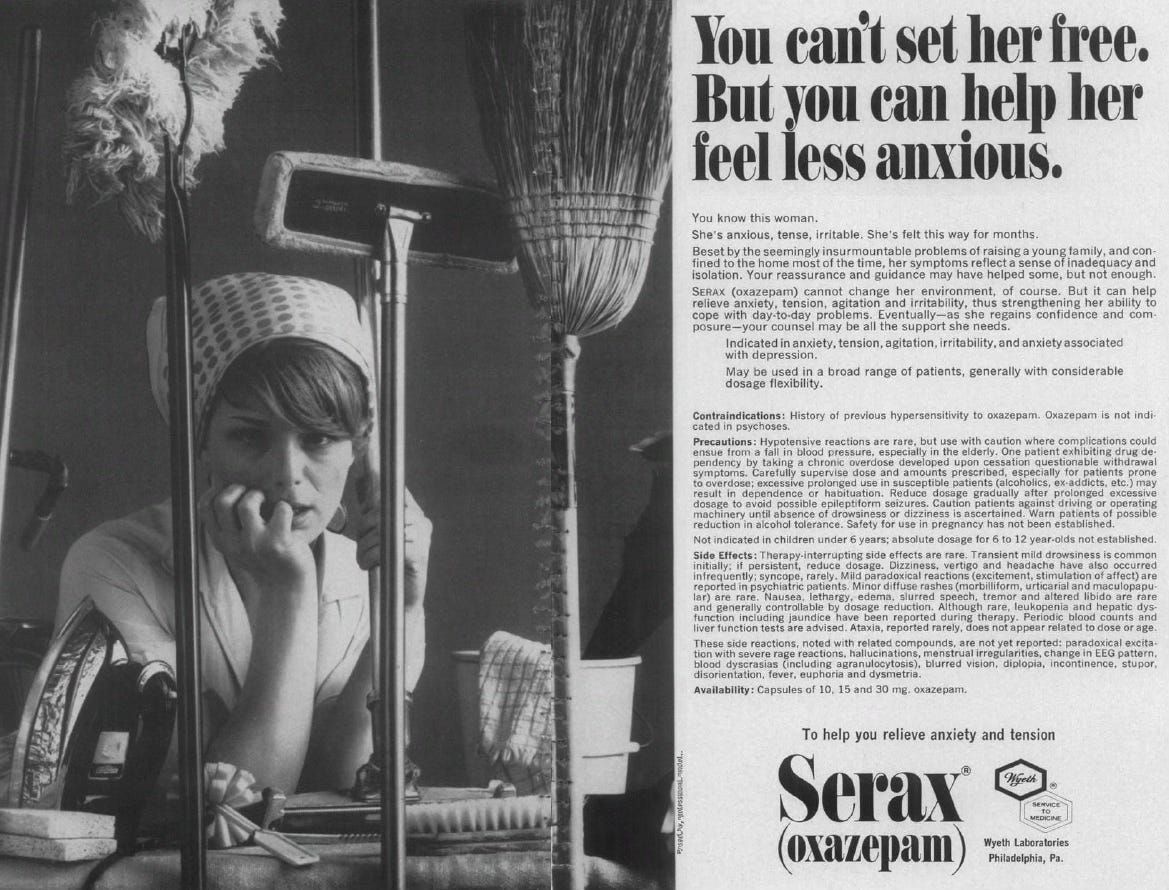
Psychopharmacology was a compromise we could get behind! We were confident we “can’t set her free.” We were willing to settle. The money felt good, and the “axiolysis” sounded like science.
Private Practice was as addictive for us as our sedatives were for our patients. A million dollars a year, maybe? We could sit, and listen, and feel like we were helping.
No, we didn’t take insurance. We are “carved out,” anyway. We refused the “opt-in” to insurance payment systems, and those systems? They obliged. Our patients would come back—weekly, monthly, but they needed a refill. So, to, our bank acounts.
We were artisinal craftsmen—and we were men, mostly—the Hermes physicians, not like our the mass market general practioners. Total suckers, accepting a few bucks per code. We didn’t have to do much to build a practice, because we would be “full” and “not accepting new patients” before you know it. It was so very comfortable.
Things began to change, and it’s hard to put a finger on when. The first threat was TMS—yes, transcranial magnetic stimulation. But, to be honest, it wasn’t much of one. No one knew what it was. That story continues, to this day. There was no successful marketing campaign. Madison Avenue didn’t carry the banner of the revolutionaries. We has tens of thousands of pschopharmacologists. They had hundreds of kooks, at most!
Ketamine was another foe, slain by it’s own generic status. But Spravato…oh, Spravato. It’s slow start was no threat. It’s “adjunctive label” was no threat. Our private practices could still ensure the cocktails on which Spravato was superimposed were personalized, tweaked, and adjusted.
The seeds of our demise, however, were laid. One of our patrons after another abandoned us. The big pharma companies stopped making drugs for us! This promising receptor profile, and next that, were abandoned. The blockbusters dried up, when it came to individual pills.
That little squirt bottle? Spravato? It proved an economic point. Just over 600 “Spravato Centers” generated $2,000,000,000 in annual revenue, last year. Our private practices weren’t centers at all. That is 3.3m per “Center.” That is not a lot of drug reps per center, and other expenses as well. The centers were more profitable than our Private Practices. It’s less dinners, less knick knacks, more consolidation.
The Center was the future, not the Private Practice. We had it easy, until is got easier for our pharma partners to abandon us.
Psychopharmacology wasn’t done in centers, it was spread out, bespoke, and very inefficient. The talkiatrists would prescribe the pills just fine—maybe some of us would sell to out to deathstance health, and get out while we could. Maybe we’d built a center too?
And some did, and some will, but the privacy of our practices make them unappealing, unnoticed, unplatformed, and patients wanted us to take insurance, too. It, quite simply, won’t do.
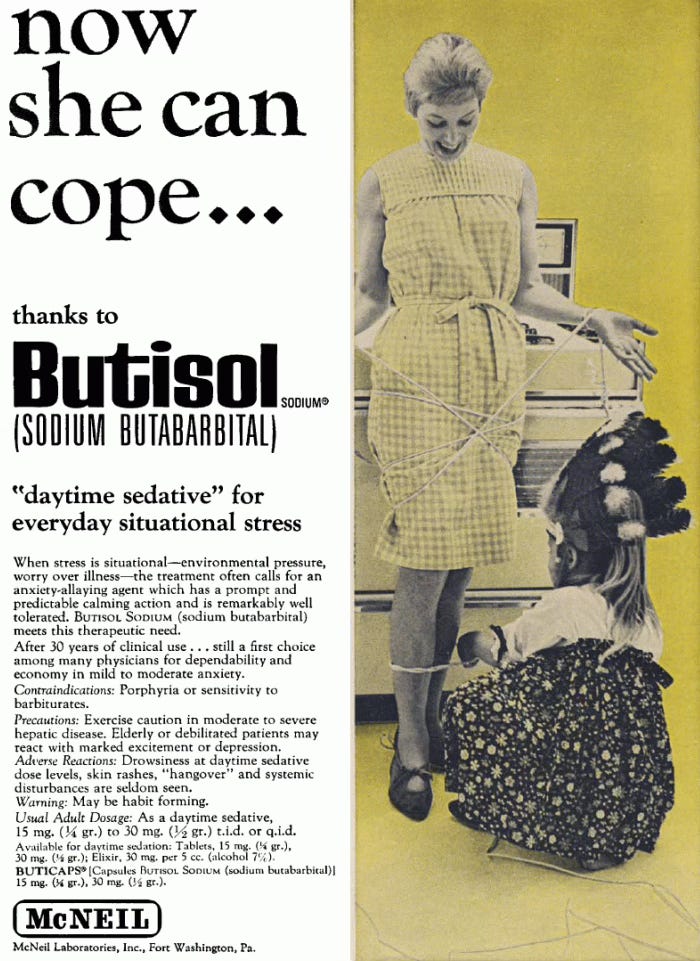
All of us, assembled, raise a cocktail in the air, and bid our fine Private Practices…adieu.
Oh boy. I guess I’m the exception. The Gen X shrink who very much see’s a need for psychoanalytic informed niche private practices. I can’t relate to this article personally . Am I lucky? Or just refusing to get on the center bandwagon?
As someone who completed their child psych fellowship in 2024 and went straight into PP, I can honestly say I’m inundated with patients from all walks of life, 4-64yo, looking for authentic connection and care. I cannot do my best work and meaningfully connect and know my patients well the way I want to in a standard hospital/clinical setting. And I take insurance, it has its obvious draw backs. It wasn’t hard to panel with realistic expectations. I’m not a millionaire but I didn’t do this to get rich or cater to the wealthy. It allows me to see a lot more patients who would never be able to afford my OOP fees. Not knowing a damn thing about business, I’ve figured it out in this day and age. My practice is full, with ongoing potential for growth. My greatest struggle these days is getting documentation done, but I’d struggle with that in any setting 🥲