
A Dispatch From Beijing
A The Frontier Psychiatrists dispatch from the Life Science Technology Forum, 2026

When my dear friend Amir Kalali, M.D. invites me to speak at an event, or simply to show up at any place on earth in his company, the right answer? It is yes.
Amir is a character. He is a psychiatrist by training, and has supervised hundreds of clinical trials in his life. He's also a deeply funny person, and gets away with a lot more puckishness then one might expect due to his British accent.
He is the founder of CNS Summit, a community and an event series that encourages people working in life sciences to work together, collaboratively, instead of in silos.
This attitude continues to this day, and that's why I went to China. I went in a spirit of collaboration. Before I write about what I've learned at the Summit, which is substantial, but not metabolized yet, I want to share a few observations about China.
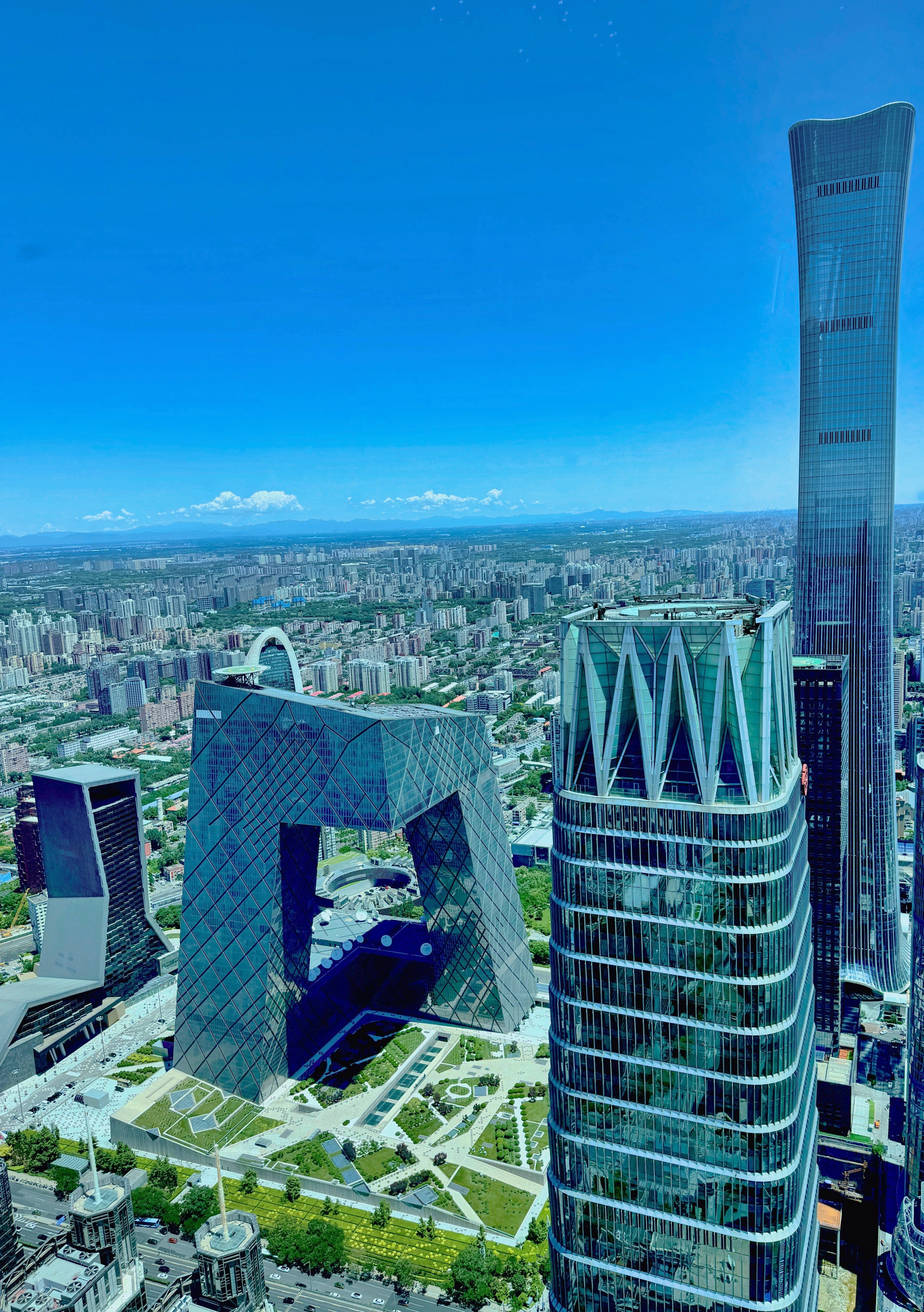
I'm in the capital of the country. Beijing is at a scale that is massive. It’s emotional analog, I have heard among locals, is Washington D.C.
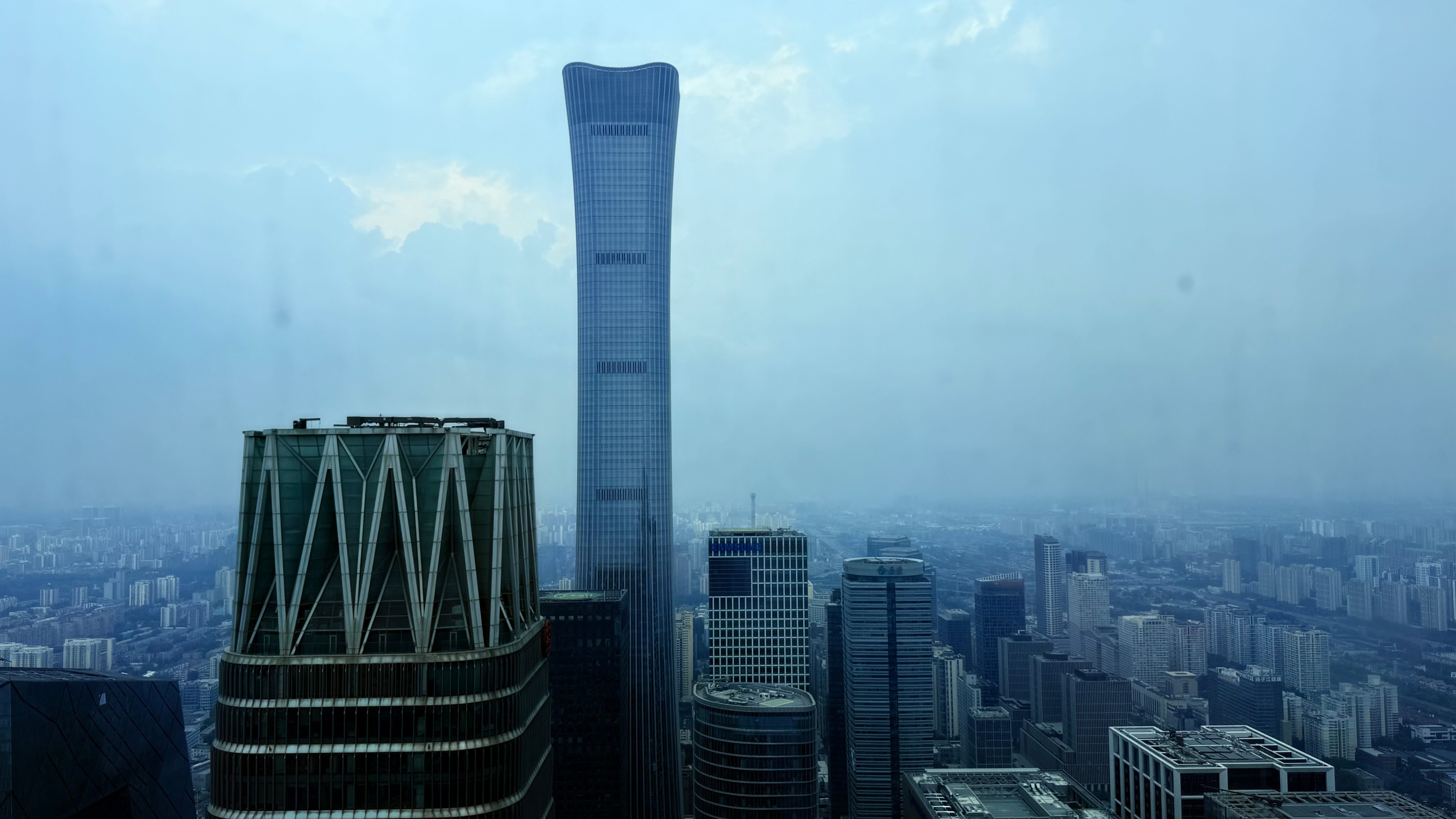
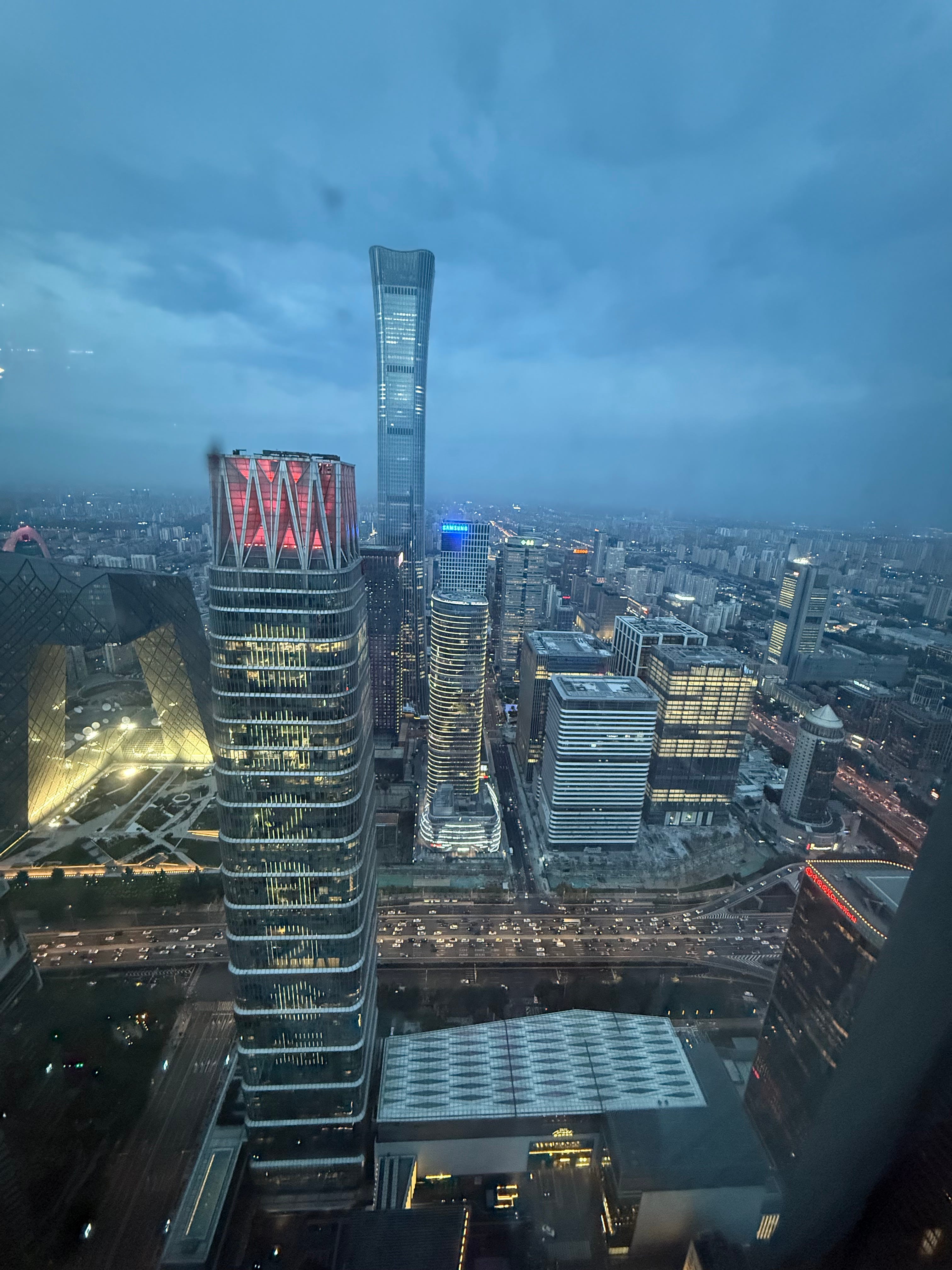
The only urban comparator I can think of in terms size is Mexico City, which has around 23 million people. Beijing has just over 22 million people. Much of the city is relatively new. I'll just take a picture of my window right now to prove it to you:
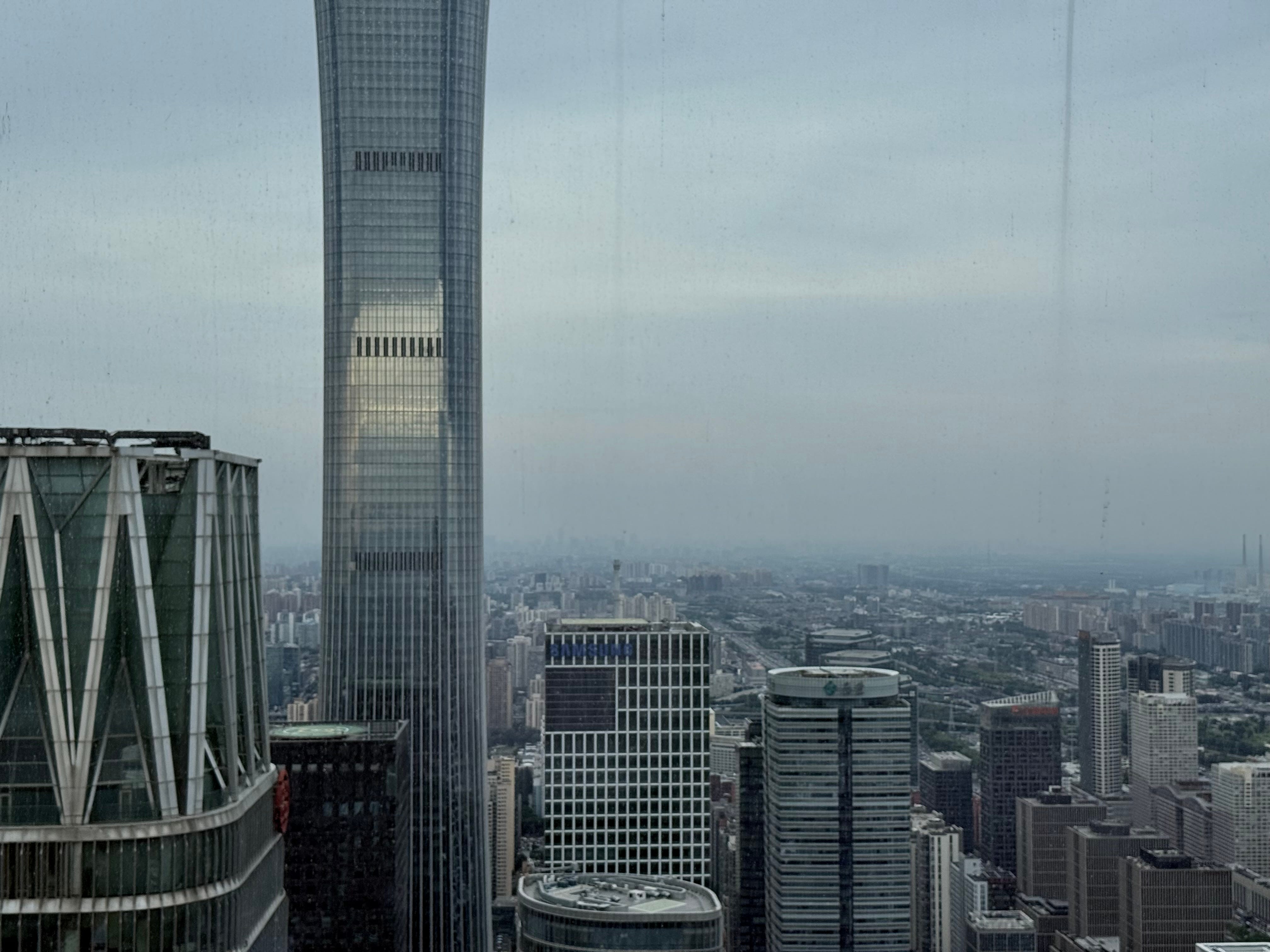
Some very old things are here as well, buried in the heart of the city, and, perhaps, in the hearts of the people.
China has billions of people, a number we don't emotionally engage with. When in Beijing, you encounter may people, in rapid sequence. You encounter enough people in a row to realize there are MORE people here than even New Yorkers, like your author, are used to processing.
There is a sense of controlled chaos, which I can best describe to only a fraction of my readers. It’s the opposite of Japan. Here, cars run red lights and grandmas make sure they can get past me on the stairs of the Great Wall. In Japan, people would die of shame for such behavior—this sense of personal fear of shame is absent in Beijing. Here, people are also restrained. However, these restrictions are the limits of human ambition and central authority. Which is not to say it’s impolite. It’s not. It’s a deeply gracious milieu, but with a sense that a rush is about to start for…something. There was a sense of safety on the edge of unease. It’s Pompeii …the week before?
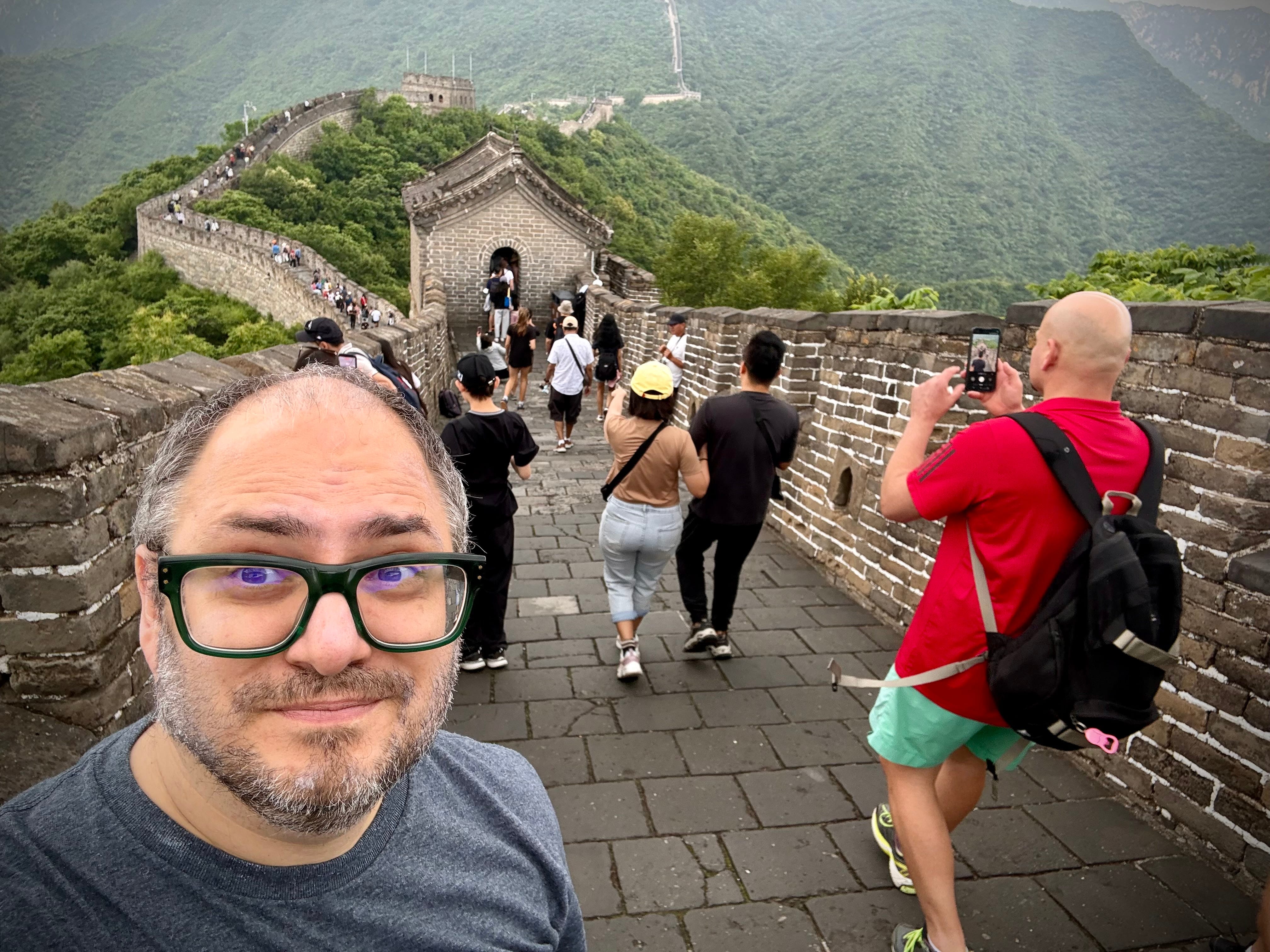
To give you a sense of how gracious it was for me, I had my glasses break as I boarded the plane:
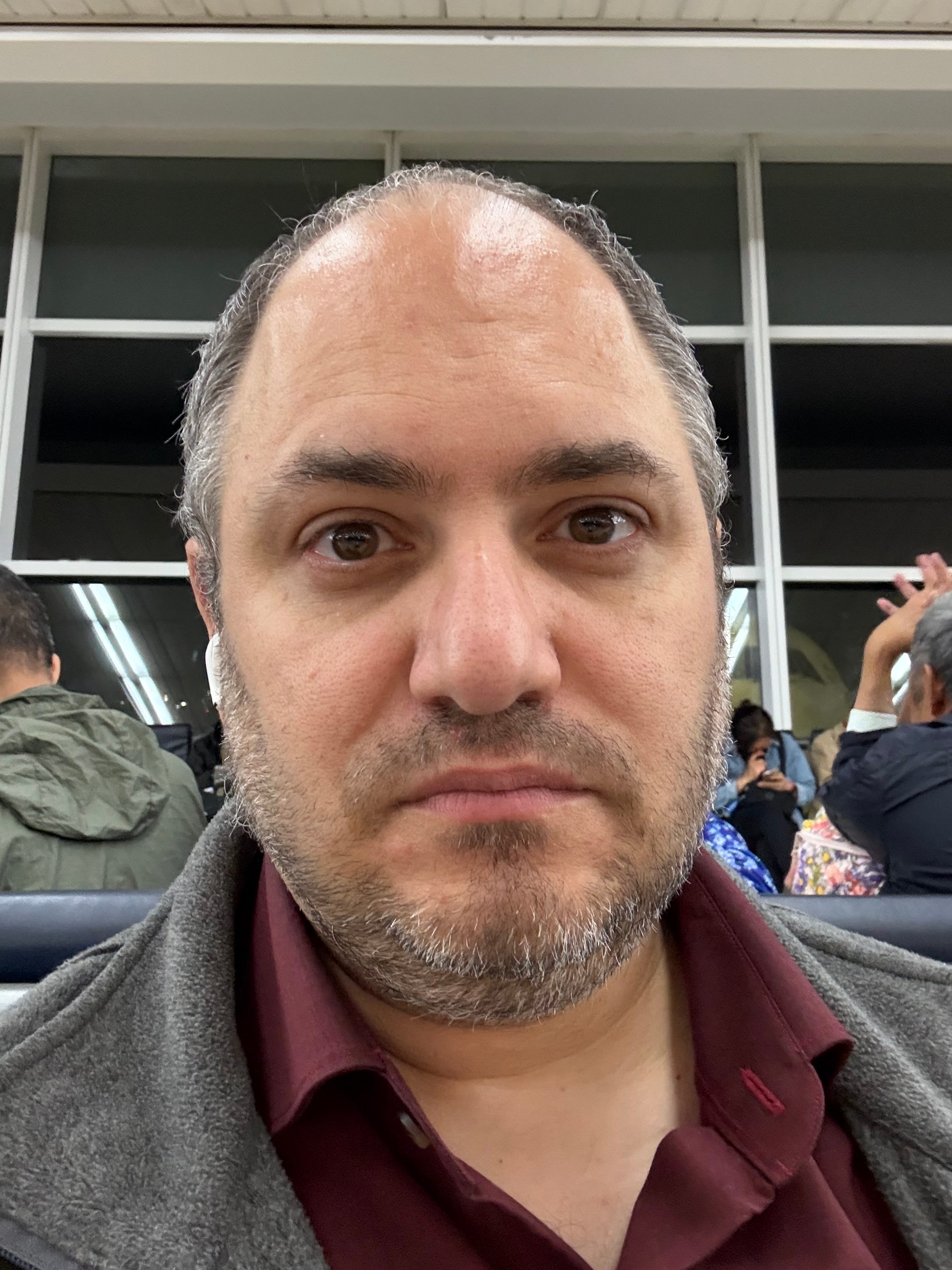
Within 30 minutes of arrival at the Beijing World Summit Wing hotel, my glasses had been whisked away, re-screwed, cleaned, and returned wrapped in gossamer paper. I was an honored guest, and my hosts made sure I knew it. And although I began to visit by noticing I was honored, I would leave feeling honored.
It’s also clear to everyone that you are being observed. There is even a visual history of electronic supervisors on the poles, as outdated cameras have more modern devices piles one on top of the other.
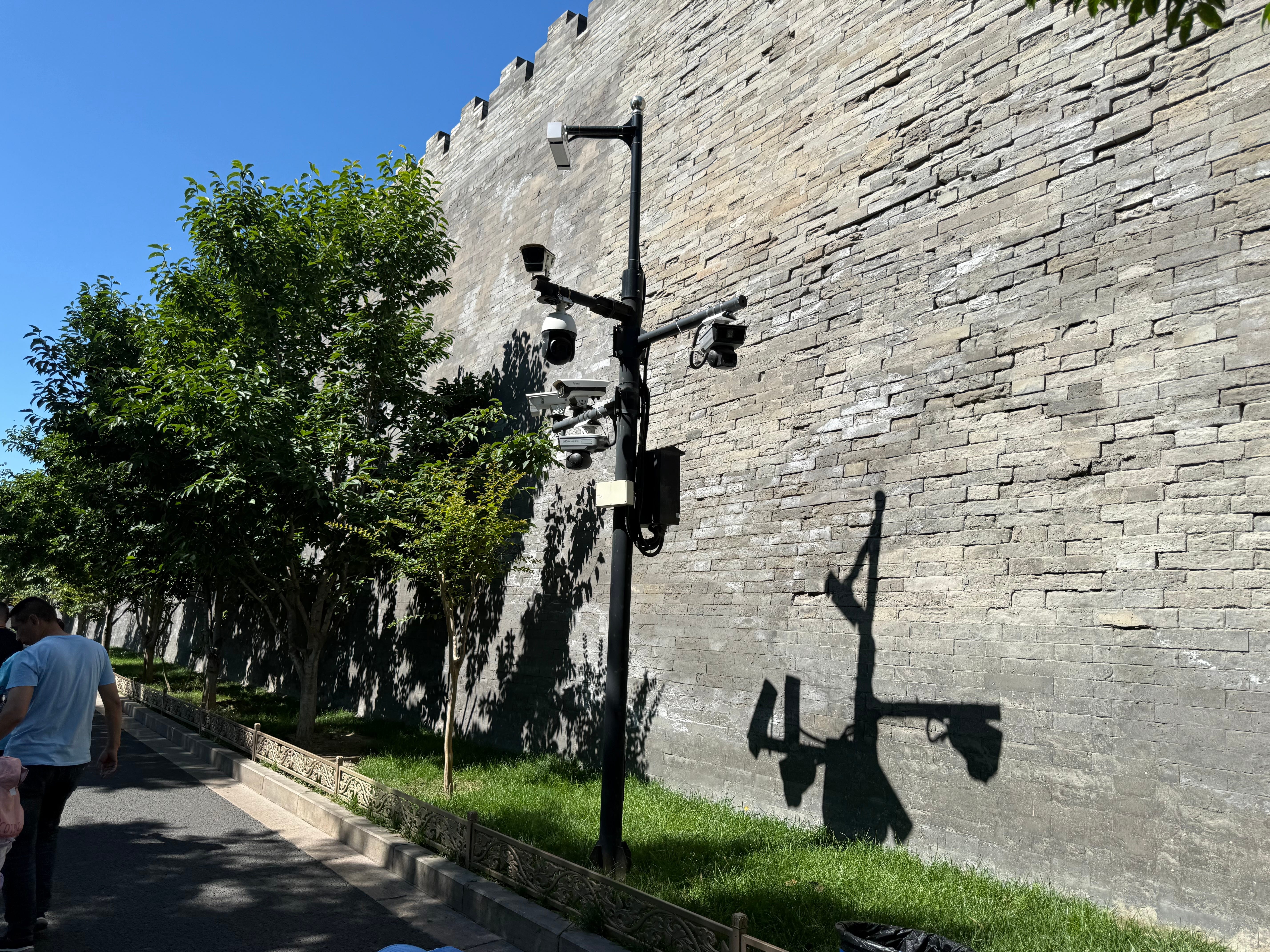
However, people also can leave unlocked bikes on the street. No one is going to take them—they would never get away with it? In Japan, this is policed by a sense or personal honor and fear of bone deep shame that keeps Kyoto free of single piece of trash. In Beijing, it feels like a fear of consequences—but I didn’t dare ask if this was true.
I edited myself quite a bit, verbally. I'm being careful about what I write now, too. People are mindful of their minders, and it feels…like part of the natural order.
Things Could Go To $&@! In a Moment.
China seems always on the brink, or brinks? Chinese history is replete with imperial intrigues, arranged murders, and fires…so many fires. These were often from lightning strikes. In The Forbidden City, a notable feature is the range of cauldrons for the emergency water supplies to put fires out:
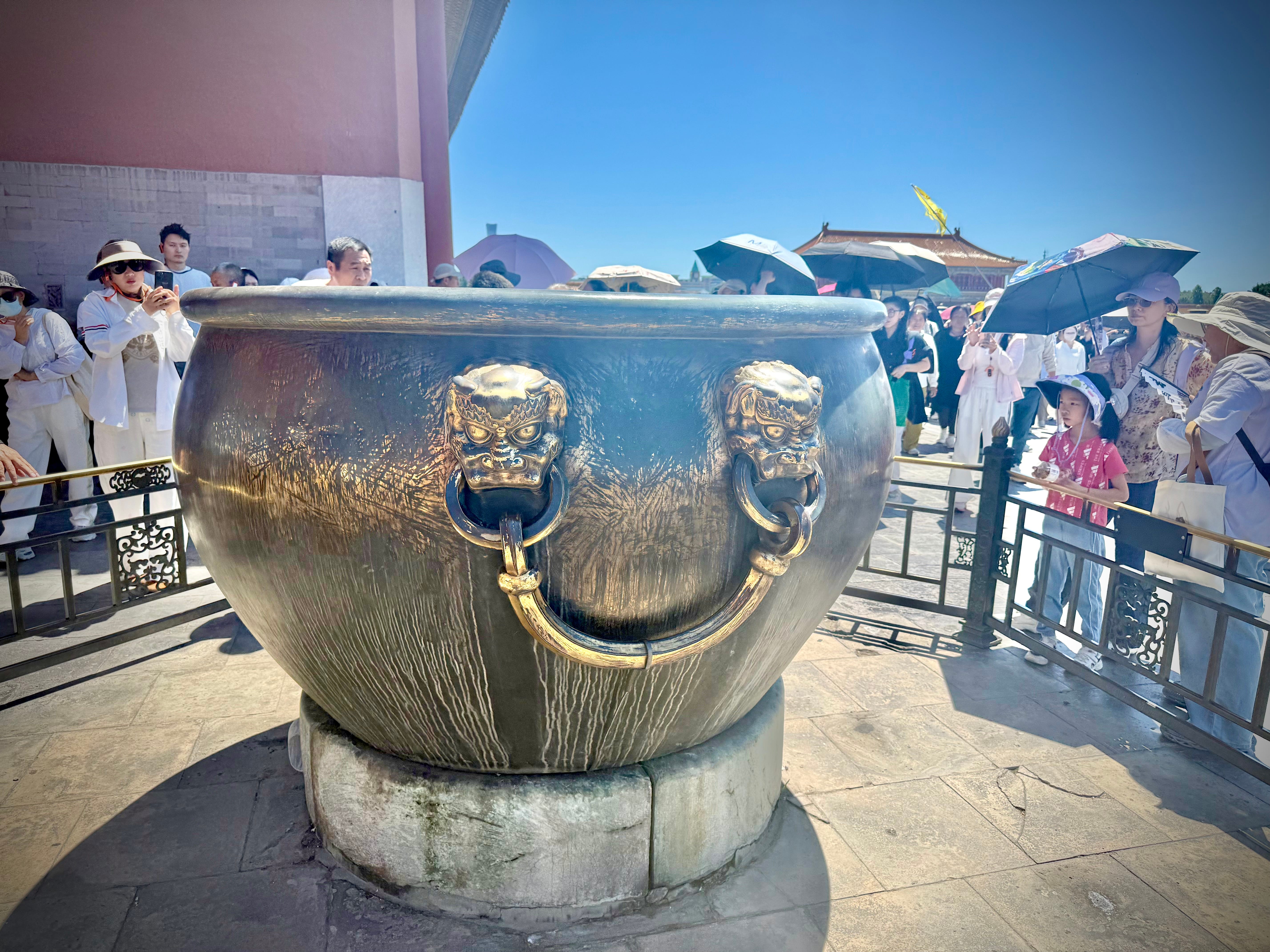
So many cauldrons. In the winter, the threat of fires by lightning didn’t abate. They would put hot coals underneath the metal basins to maintain the liquid status of water at all times—such was the ever present threat of lightning, out of the blue, threatening all the most powerful people in their world held dear.
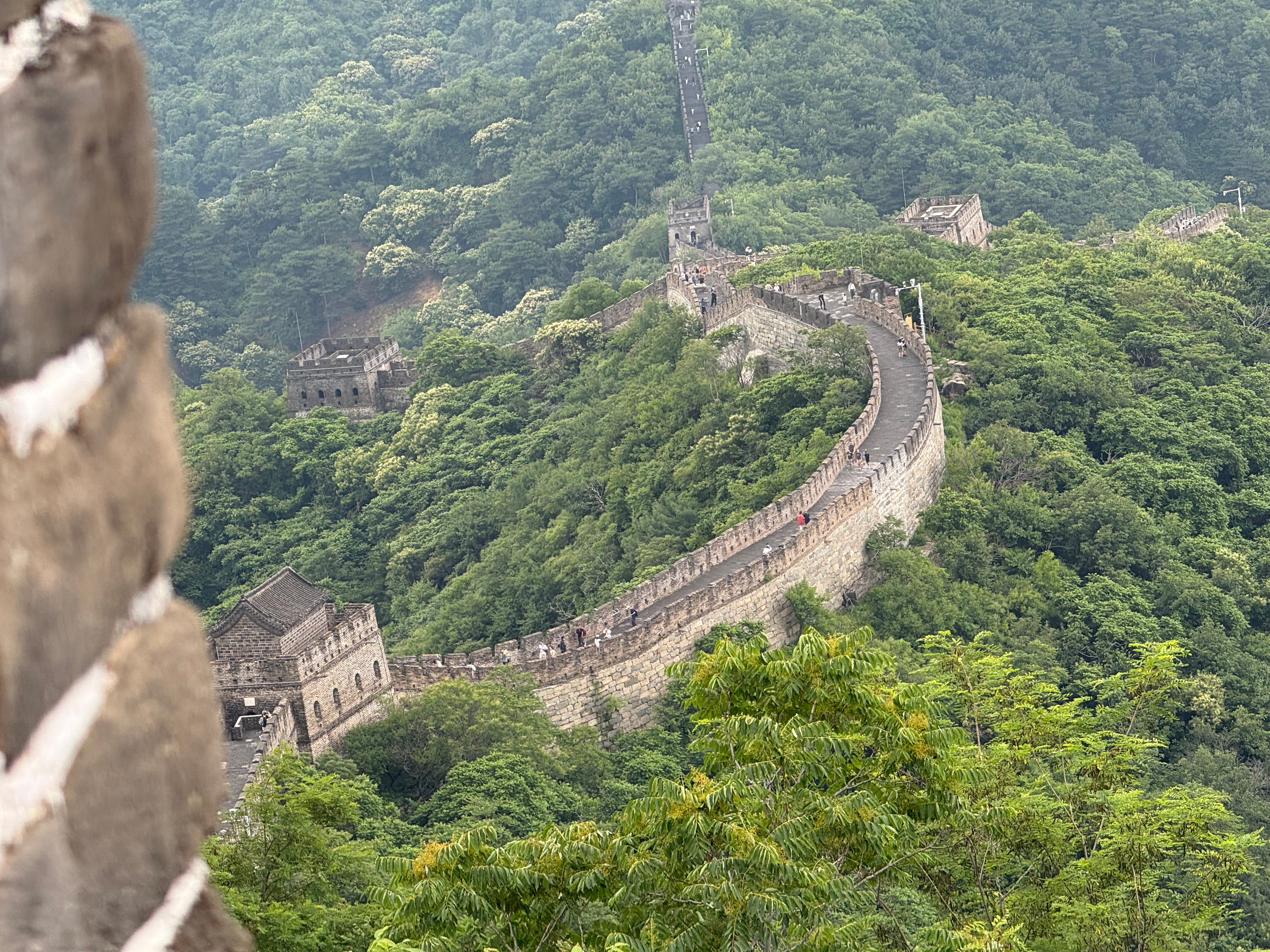
The sense of threat—and remarkable preparation to avert it—extends to China’s own wonder of the world. The Great Wall is a project, spanning over two thousand years, to protect overwhelmingly Han ethnicity China from the Existential Threat across most of human history—horse archers from the steppe. Begun in 221 BCE, its most modern segment is “only” 616 years old.
From the wall, 80+ km away, on a clear day, you could see the same very tall building I could see from my hotel room:
Mongols, Huns, and other nomadic horse warriors were so threatening that it made sense to haul huge stones, in a pre-mechanical era, with only donkeys and goats as adjunctive labor, up mountains that were, themselves, a barrier to all but the most ambitious horsemen.
Chinese emperor had the audacity to think that crisis could be averted. Thousands died in the making of this wall. It's on the top of mountain ranges, mostly, so high that it was so frightening to walk along its length that I turned back, at one point. I was afraid I would fall, and everything I loved would be taken from me. The same fear motivated the building of the longest wall ever.
Existential threats, to the leaders of China, are things that have always been planned for. There have always been preparation to stop it. They're ready, not on the time scale of years, but on the time scale of millennia, for what may come.
More dispatches plz. Thx.
Say ‘Hi’ to Amir for me….